


When One CEX Moves the Market: The Risk of Liquidity Concentration
Kaiko, a provider of professional crypto market data and analytics, warns that the concentration of liquidity on Binance creates serious risks for all market participants. I read about this in an article on DLNews.
According to Kaiko, the risk is that operational, legal, or technical issues at Binance could potentially trigger sharp price movements and broader market instability. We already saw an example of this on October 10, when sudden movements on Binance led to multi-billion-dollar liquidations across other platforms.
The problem here is not that the entire market simply uses Binance or other top exchanges as a price reference. Ignoring a particular exchange price is easy. At rabbit.io, we always find the best available rates on the market for your swap, and quite often those rates do not come from large centralized exchanges at all.
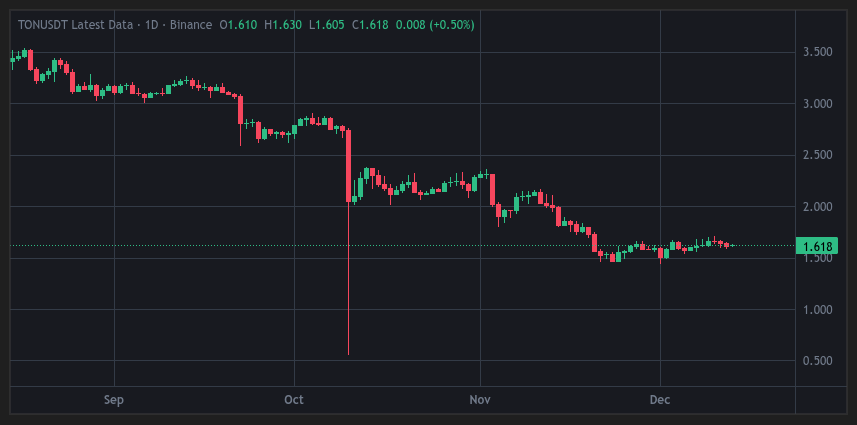
The real issue is that prices on such exchanges genuinely influence prices everywhere else. Let me explain this using TON on October 10 as an example. When the TON/USDT price on Binance collapsed from 2.75 to 0.55, arbitrage traders rushed to close the gap. They bought the undervalued TON on Binance and sold it wherever they could. But aligning prices with a giant like Binance required a huge volume of sells. As a result, prices were pushed down everywhere TON was traded.
Prices may not have fallen all the way to 0.55 in every venue. For example, I do not recall a single real exchange on rabbit.io that day at such a rate. Still, the drop was very significant. The same pattern was observed with other assets as well.
So the core issue is liquidity concentration, not just which exchange we treat as a price benchmark. On this point, I fully agree with Kaiko's assessment. The only pity is that I cannot find the original Kaiko report to see whether they propose any concrete solutions. For now, it feels like the collapses of Mt. Gox and FTX have taught traders nothing. Market participants continue to ignore this systemic risk, which means liquidity concentration is likely to repeat itself again and again.