



What’s Wrong With Crypto? Part I
Remember how easy and free the crypto market felt ten years ago? No barriers, no hurdles. You could swap one coin for another, or trade crypto for fiat money, no problem. Going the other way - fiat to crypto - was a bit trickier, but mostly because of the fiat side. Traditional financial institutions like to complicate things with checks, limits, and restrictions.
Today, cryptocurrencies are just as restricted - if not more - than fiat. And a big chunk of those restrictions come from governments.
So why are they making our lives harder? Everything was working fine! Who did crypto hurt? What’s so bad about crypto that it needs to be banned or restricted?
Let’s take a look at how governments around the world answer this question.
Economic Risks
The official line goes something like this: cryptocurrencies are speculative assets, which makes them too volatile and potentially dangerous to the economy. If banks or governments were to hold significant reserves in crypto and the market suddenly crashed, that could trigger a domino effect and drag down the whole financial system. The BIS has made this point, and so has the IMF - especially when El Salvador made Bitcoin legal tender and offered a government-backed exchange between BTC and USD.
And, fair enough, there’s something to that argument:
- Imagine a major transaction - say, a state deal - is paid in crypto, and just hours later the price drops by 10-20%. That deal could fall apart.
- Now flip it: the price skyrockets. Can the state still guarantee a BTC-USD exchange at market rates? Where are they going to get all those dollars?
Yes, crypto reserves probably do carry risk for governments and large banks. But then again - are the assets they currently hold, like dollars or gold, all that stable?
- Over the past four years, the price of a bottle of water at my local store has doubled in dollar terms. My favorite dish at a nearby restaurant quadrupled. It’s not the food or water that got more expensive - it’s the dollar that lost value.
Gold's price chart is basically going parabolic.
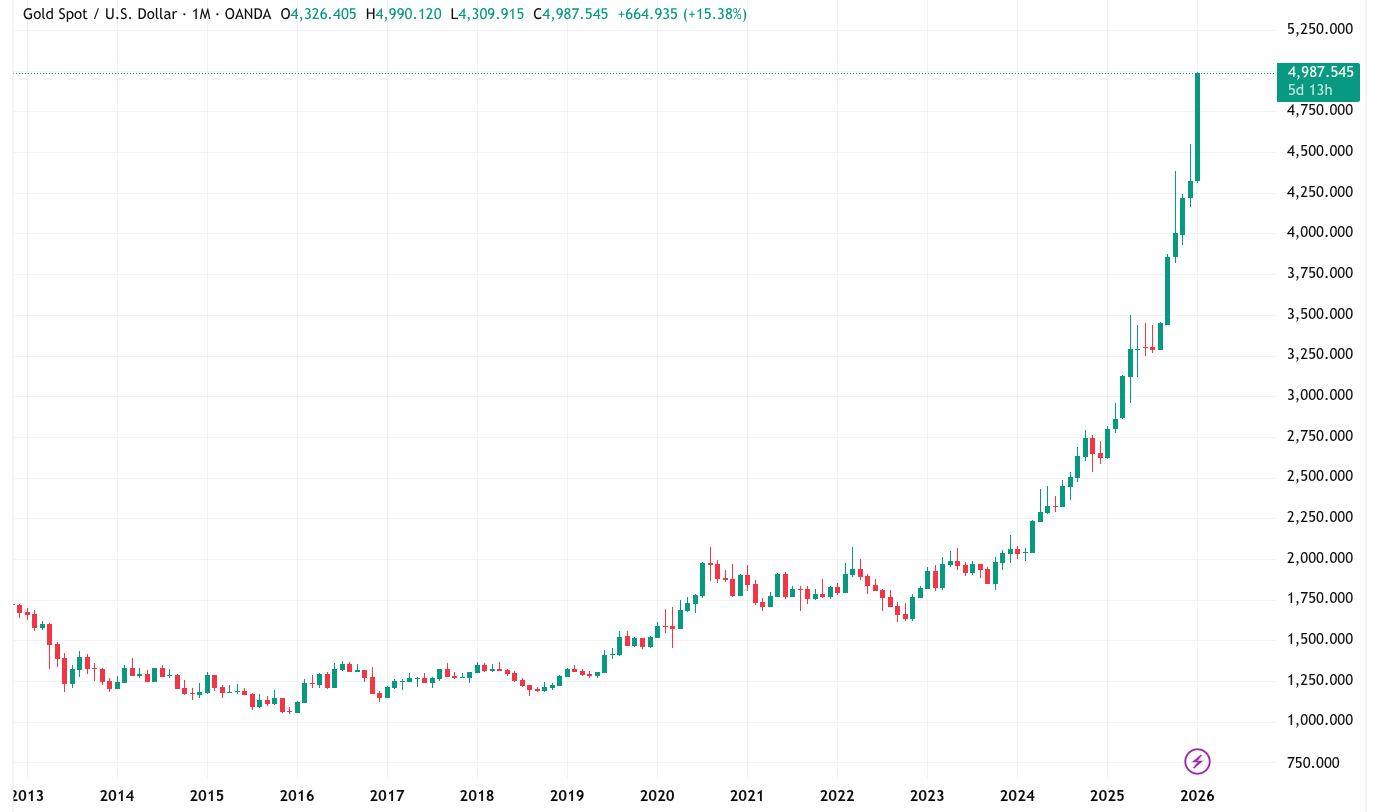
Of course, that kind of fluctuation doesn’t come close to what we see in crypto, where double-digit swings in a single day are normal. So yes - volatility is a fair criticism.
It makes sense for governments and large institutions to restrict crypto in their reserves. But what about regular people? Why are restrictions being placed on them?
Protecting People From Themselves
If someone like you or me keeps savings in crypto and the price suddenly crashes, there won’t be a national financial meltdown. But a personal one could be very possible.
A person - or an entire family - could be left without money for basic needs and might end up relying on social support. That’s an extra burden for the state - and no government likes added pressure on its budget.
So the logic goes: if someone doesn’t understand the risks, they probably shouldn’t be dabbling in risky assets. Which is why some authorities recommend limiting access to crypto for people without the necessary experience or knowledge.
That makes some sense. But aren’t business ventures risky too? They fail all the time - yet governments don’t usually ban entrepreneurship. What about lotteries or gambling? Lotteries are often run by governments themselves!
So yes, this argument is honest and has its logic. But if we follow it to its conclusion, then there are plenty of other risky activities that should be restricted too.
Taxes
Tax evasion is another solid reason governments bring up.
Crypto lets people earn and spend money outside the traditional system. You can store wealth outside the banking system, beyond the reach of traditional asset freezes and seizures. This challenges long-established systems of income monitoring and tax collection. And let’s face it: governments are massive bureaucracies that don’t adapt easily. They prefer to ban what they can’t control.
That’s why, in some countries, instead of outright bans you get things like:
- outrageous tax rates;
- transaction-level taxes;
- reporting requirements so complex they’re nearly impossible to follow.
And yet, in theory, taxes could be paid in crypto just fine. Some governments even allow it. But then new problems emerge:
- If the crypto is private, it’s genuinely hard to trace and tax correctly.
- If the crypto is public, then tax-paying citizens could see exactly where every satoshi of their payment goes. In fact, you could design a system where taxes can only be spent in ways pre-approved by each taxpayer.
That would be true public oversight - and that’s something very few people in power are eager to allow. After all, power means you control others, not the other way around.
So it’s much simpler to pretend that crypto is totally untraceable and that anyone using it is hiding their income.
Competition to Government-Issued Digital Currencies
Too much transparency isn’t welcome either. That’s why most governments don’t use public blockchains when launching their own digital money - they build semi-private systems where only authorized agencies can view transactions or write smart contracts.
The message is clear: digital money is great - but only if it’s issued by the state. So when countries restrict crypto to make room for central bank digital currencies (CBDCs), they’re not attacking crypto’s flaws - they’re attacking its independence. In these cases, the problem isn’t what crypto is, but who issues it.
Of course, no one says, “We’re banning crypto because it competes with our money.” Instead, they say things like: “We’re banning crypto payments because we have an official currency.”
That reminds me of an old myth from Bitcoin’s early days - that Bitcoin was illegal because it wasn’t legal tender. The community had a clever response: “Chickens aren't legal tender either, but bartering with chickens is not illegal.”
And it’s true - just because there’s a national currency doesn’t mean alternative forms of payment are automatically illegal.
But in some countries where crypto payments are banned, a strange paradox emerges: you may still barter ducks for chickens - but not chickens for Bitcoin, or Bitcoin for ducks. Even more oddly, in many of these same countries, crypto-to-crypto exchanges remain legal.
So you can go on rabbit.io from such countries and swap Bitcoin for Monero, or USDT for USDC - and that’s totally legal. Lots of people do it. Which leaves me scratching my head: why are some exchanges banned and others allowed? What’s the logic?
Of course, these aren’t all the reasons governments give when restricting or banning crypto. There are plenty more - some laughable to crypto enthusiasts, others quite serious and worth paying attention to.
I’ll cover the rest in Part II, which drops here in exactly one week.