


PACT: Ownership Before the Quantum Era
Yesterday, Paradigm published another proposal on how to address the potential impact of quantum computing on Bitcoin’s cryptography. It’s called PACT (Provable Address-Control Timestamp).
The idea is fairly straightforward: today, while quantum attacks are still impractical, the owner of a vulnerable address - especially someone who doesn’t want to move their coins or draw attention to themselves - can generate a zero-knowledge proof of address ownership with a verifiable timestamp.
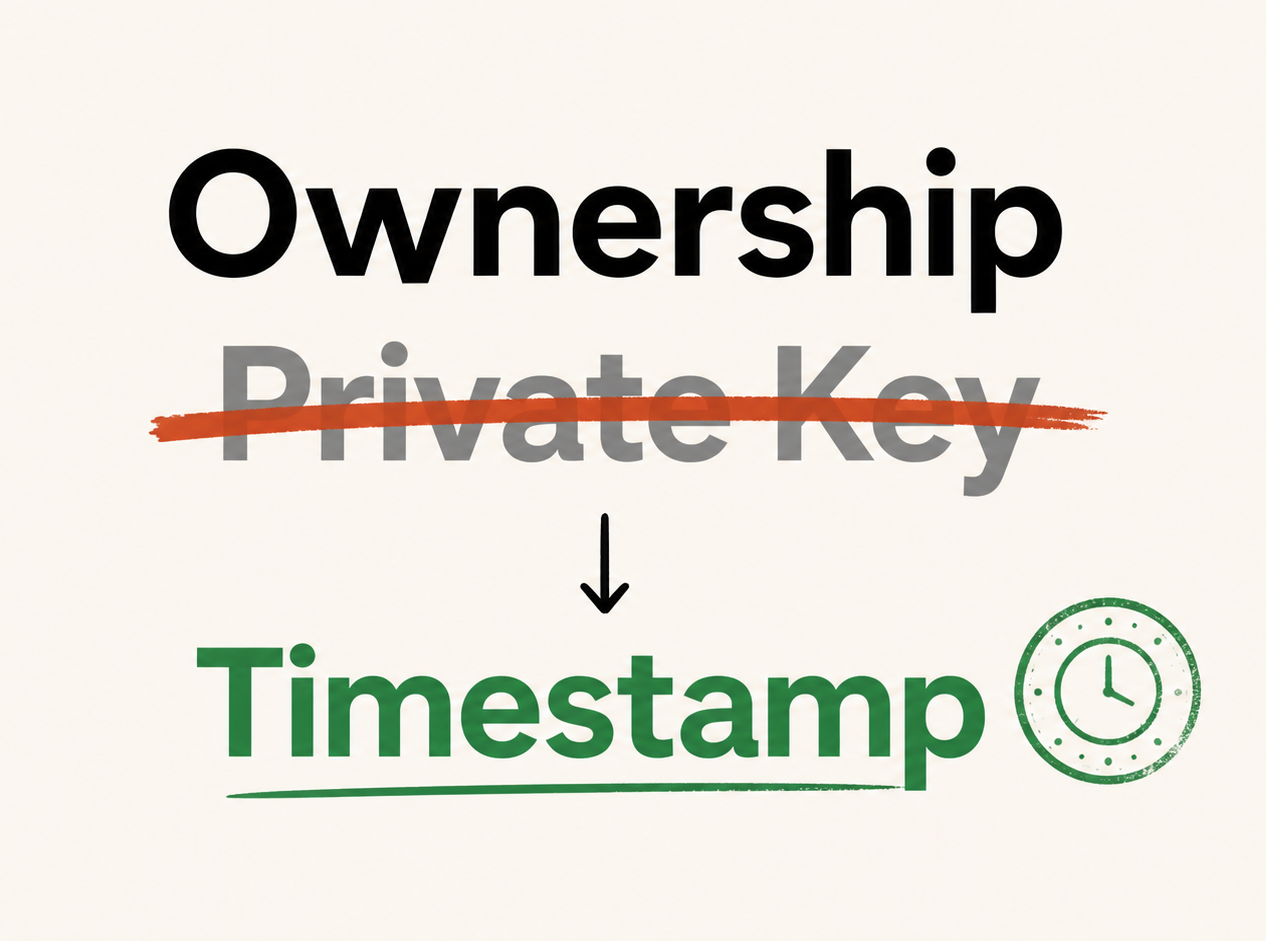
According to the proposal, if quantum computers eventually become powerful enough to pose a real threat, and the community decides to freeze vulnerable addresses, this pre-generated proof (PACT) could be used to authorize transactions from those addresses. Why would that matter? Because once quantum attacks become feasible, private keys for vulnerable addresses could effectively be derived by anyone, making them unreliable as proof of ownership. A PACT, however, would show that you controlled the address not only in the post-quantum era, but before it as well. In other words, only someone with a valid PACT could be treated as the “legitimate” owner of the address.
That said, the proposal rests on quite a few assumptions:
- Will a sufficiently powerful quantum computer actually be built?
- Will Bitcoin’s consensus look anything like it does today by then?
- Will the community agree to freeze vulnerable addresses?
- And even if it does, will their owners go along with it?
All of this makes the real-world applicability of PACT questionable.
But the concept does suggest an interesting answer to a more immediate question: in normal, pre-quantum conditions, who should be considered the rightful owner of bitcoins if multiple people have access to the same private key? In a way, it resembles a claim of authorship: whoever can prove they had access to the address earlier can be treated as the owner.
Seen from that angle, PACT is less about solving a hypothetical cryptographic threat and more about addressing a very real legal ambiguity.