


Bitcoin 2025 Year in Review
Back at the start of the year, I wrote that Bitcoin was attracting serious attention from developers and that we could expect new, interesting solutions to make a major contribution to its development.
Now the year is coming to an end. So, what important innovations did it actually bring to Bitcoin?
If you spent all of 2025 watching Bitcoin solely through price charts on an exchange, I have news for you: you missed all the best parts.
While traders were drawing lines on graphs, a quiet revolution took place in the ecosystem of the leading cryptocurrency. For a long time, Bitcoin was criticized for two things:
- The usability dilemma: You had to choose between being too slow (on-chain) or too complex (Lightning).
- The tech gap: Bitcoin was seen as “technologically backward compared to trendy altcoins.”
And then there was the scary bedtime story everyone liked to tell: that Bitcoin is propped up entirely by the USDT stablecoin, and if Tether collapses, it’s the end for Bitcoin.
The results of 2025 allow us to answer all these criticisms. Let’s break down what changed and why it’s a big deal.
Spark and Ark: New and User-Friendly Layers
In 2025, users gained access to two Layer 2 systems that significantly simplify instant payments. Previously, for fast and cheap transfers, you had to open Lightning channels, monitor their liquidity, and hope they wouldn’t close on you. Now, the tasks of opening and maintaining channels are handled by the operators of these new L2s, leaving the user with just two buttons: “Send” and “Receive.”
The first of these new layers is Spark. This is a protocol where Bitcoin transfers are not only fast but free. You can try it out in the new non-custodial version of the popular Wallet of Satoshi, as well as in the Blitz wallet, and in BitBit — a simple browser extension that lets you create wallets based on X (Twitter) accounts and send tips for posts you like.
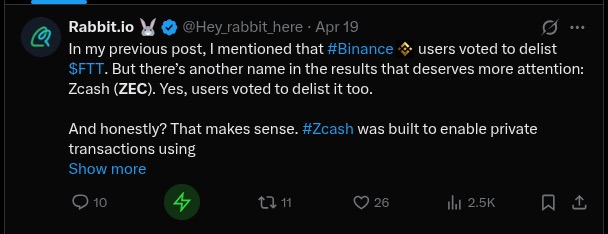
Interaction with on-chain transactions and Lightning transfers happens via atomic swaps. The sender simply transfers BTC however is convenient for them, and the operator swaps it for BTC on Spark. Just as easily, without jumping through hoops, you can send Bitcoins from Spark to the mainnet or to Lightning wallets.
There is one unpleasant detail: if all Spark operators were to shut down and none of them signed the transaction required to withdraw funds, the funds would effectively get stuck. You could argue that the same thing would happen with on-chain funds if all miners disconnected from the main network. But no, it’s not quite the same. If miners disappear, anyone can become a new miner — even you or I. But a Spark Entity relies on a predefined, fixed group of operators, and that set is not open for anyone to join on demand.
Another similar layer is Ark. It virtualizes the UTXO model, creating Virtual Transaction Outputs (VTXOs) that don't need to be published to the blockchain. Essentially, a multitude of off-chain transfers are processed by Ark providers and then rolled up into one final Bitcoin transaction, taking the load off the main network. It’s like Lightning, but without the need to manage channel states yourself.
Transfers from Ark to Lightning are also carried out via atomic swaps. As with Spark, this happens “under the hood” of the wallet. The user doesn’t need to open payment channels themselves, maintain them, or pray they don’t close at the worst possible moment, eating up fees.
In Ark, there is no issue of funds getting stuck if operators go offline. Any virtual transaction output you hold can become real if you publish it to the Bitcoin mainnet. And you don’t need an Ark provider for that.
The primary wallet for Ark is Arkade.
RGB: Complex Smart Contracts on Bitcoin
In mid-2025, two versions of the RGB protocol (v0.11.1 and v0.12.0) were released on the Bitcoin mainnet. They are incompatible with each other, but they solve the same problem: launching smart contracts whose execution is secured by the immutability of Bitcoin’s base layer.
All verification of actions related to executing smart contracts happens on the user side. This means that if a smart contract is designed to issue and transfer tokens, the token issuance is announced in a Bitcoin block, but the transactions themselves happen behind the scenes. This provides scalability and privacy. Furthermore, data related to the smart contract’s operation doesn’t bloat the blockchain like it does in other cryptocurrency networks.
You can build decentralized applications on RGB without moving to other chains. Will there be demand for this? Time will tell. It seems that the idea of complex smart contracts is an object of worship in other networks like Ethereum, Solana, Tron, etc. Bitcoiners have never placed much importance on them. However, the very fact that RGB has arrived noticeably expands Bitcoin's capabilities. Who knows, maybe it will bring practical innovations to Bitcoin.
You can try out RGB using the Iris and Tribe wallets.
USDT and Bitcoin: It Didn't Work Out (Again)
2025 saw significant events regarding the USDT stablecoin on the Bitcoin blockchain.
As a reminder, since 2014, USDT was issued on top of Bitcoin via the Omni protocol. However, these tokens were wanted by almost no one. At Rabbit.io, I can recall only one instance where someone approached us to exchange USDT based on Omni. And so, in 2025, Tether finally confirmed it is ending support for Omni. That’s it — there are no more issuer-recognized USDT tokens on the Bitcoin blockchain.
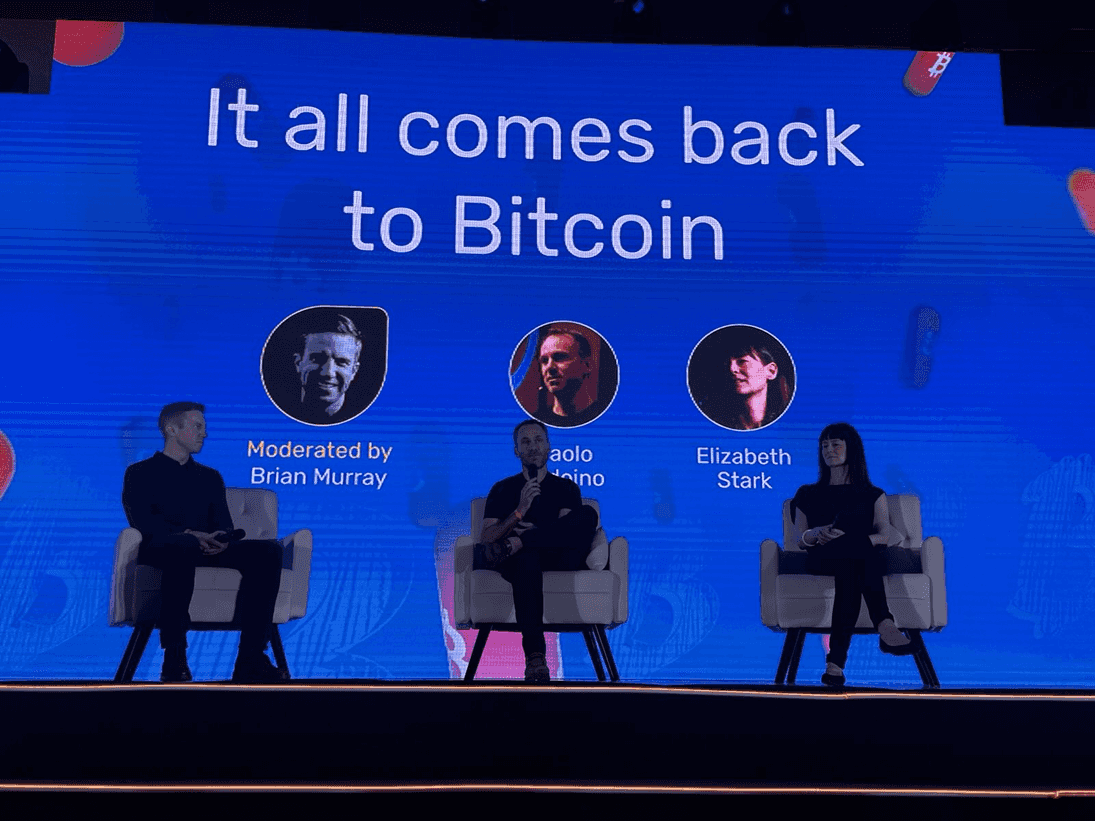
In their marketing, Tether constantly tries to piggyback on Bitcoin. Tether CEO Paolo Ardoino never tires of professing his commitment to the ideals of the first cryptocurrency.
And despite the officially finalized divorce from Bitcoin, Tether attempted to return to it. In two ways, no less.
- Taproot Assets. In January 2025, Tether introduced USDT in the Bitcoin ecosystem using the Taproot Assets protocol from Lightning Labs. Taproot Assets is a protocol based on Bitcoin and Lightning that allows USDT to exist on both the main Bitcoin layer and the Lightning network simultaneously.
- RGB. In August 2025, Tether announced the issuance of USDT on the RGB protocol. RGB allows for the issuance of private and scalable assets with client-side validation. Tether promises that USDT will be stored alongside Bitcoins in the same wallet, and it will be possible to send and receive it offline.
But so far, things haven't gone beyond plans. There is nothing difficult about issuing tokens on these protocols. However, the USDT token is positioned as a backed stablecoin. This means that to issue tokens, one of Tether's clients needs to hand over dollars to the issuer and ask for the corresponding amount of tokens in the chosen network in return. And, apparently, none of those mysterious clients depositing billions upon billions into Tether accounts asked for tokens on the new protocols in the Bitcoin ecosystem.
Go to the official Tether website and look at how much USDT has actually been issued on Bitcoin’s new protocols: zero. This clearly illustrates the level of real connection between Tether and Bitcoin. Those who use Bitcoin use Bitcoin itself. They don't need dollar-pegged crutches inside the network. And those who use USDT stay on other networks.
They only intersect during exchange. Yes, the BTC - USDT exchange direction is very popular. On Rabbit.io, it is one of the most popular pairs. But it is far from the only one. People just as actively swap Bitcoin for Monero, and USDT for USDC. Such exchanges are often necessary precisely because someone prefers one asset and someone else prefers another. To settle with each other, these people need an exchange.
Bitcoin and USDT are no closer to each other than Bitcoin and some tokenized gold (PAXG or XAUT), or Bitcoin and exchange tokens (BNB or HYPE). Why would the collapse of any of these tokens be the collapse of Bitcoin? I don't see the connection.
Now we can boldly tell critics that Bitcoin has nothing to fear from a USDT collapse. Bitcoin does not depend on it. This was proven in practice in 2025: Tether promised, but never actually launched (with any volume) on Bitcoin protocols. Their audiences have drifted too far apart.
Where Bitcoin is Heading
I consider these three events — new L2s, a new smart contract system, and the break with USDT — to be the real main outcomes of 2025. There were, of course, others worth noting:
- Lightning capacity hit record highs, exceeding the 2023 maximum. Major players trust the network, and new records show it is far from a "dead project." Given the compatibility of Spark and Ark, Lightning has every chance of becoming the main transport layer for fast, confidential transfers between different parts of the evolving ecosystem.
- El Salvador amended its Bitcoin law. Now, there is no state in the world guaranteeing Bitcoin liquidity. This is, of course, a notable event. But Bitcoin existed before it became mandatory to accept somewhere — and it will continue to exist.
- Price records. 2025 turned out to be very successful for the Bitcoin price: the rate rewrote one all-time high after another.
And a list of technical changes is well summarized in the Bitcoin Optech review.
2025 showed that Bitcoin continues to evolve, not in the base protocol (consensus remains the same), but through layers and ecosystem solutions. One could say that by the end of 2025, Bitcoin has arrived as an absolutely self-sufficient ecosystem.
Not long ago, I read somewhere that in the cryptocurrency world, Bitcoin has firmly secured only one role — the role of a sacred symbol. And that all practical tasks have long been solved by other cryptocurrencies. It sounded quite convincing. I wonder if the events I described in this article will change anything, and whether we should expect them to bring about the mass adoption of Bitcoin.