


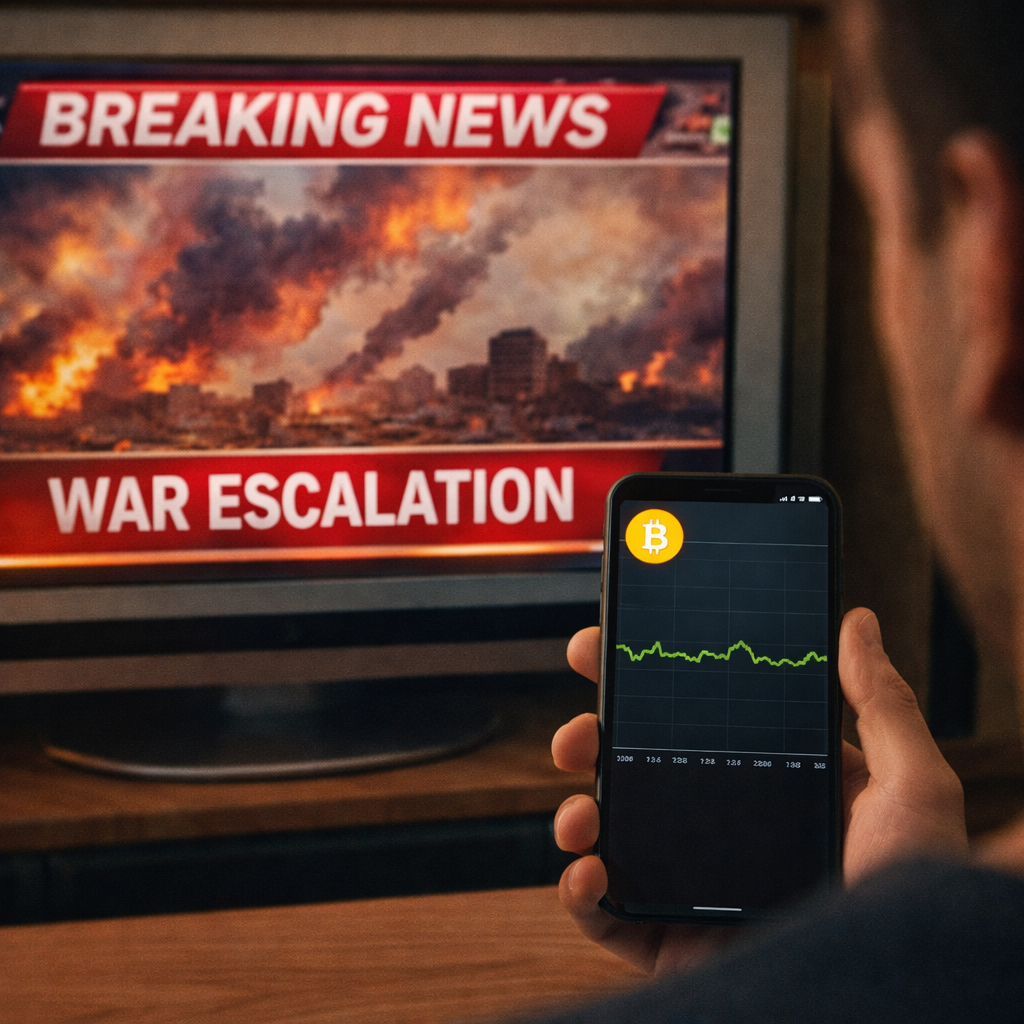
Why Crypto Didn’t Crash During the Latest Middle East Escalation
The war in the Middle East has now been going on for four days, drawing in more and more countries. It feels far more serious than many of the previous flare-ups in the region.
And yet crypto prices haven’t collapsed. Over these four days, they’ve moved both down and up - but only slightly. Overall, the market has been doing its own thing, without panic or shock.
Why is that?
Remember the previous escalations in the Middle East? In 2024 and 2025, they triggered sharp sell-offs across the crypto market. So what’s different now?
Many - following Arthur Hayes - believe the Federal Reserve will eventually print money to finance growing military spending. In that scenario, markets could keep rising nominally, simply because the dollar itself continues to lose purchasing power.
But I think that explanation applies to only a handful of cryptocurrencies. Bitcoin - yes, that makes sense. As for most other assets, it’s hard to see how that logic directly supports them.
What I see in the market’s unusually calm reaction to the conflict is something else entirely: the crypto space may no longer be dominated by participants who treat digital assets as pure high-risk bets.
Those traders typically come chasing outsized returns - and as we know, high returns are the reward for high risk. When profit expectations fade, they rush for the exit, pushing prices down in the process.
If prices haven’t collapsed this time, could it be that most current holders are in crypto for the long haul rather than for quick gains?
From what I’m seeing - yes.
Rabbit.io users continue swapping assets calmly, getting exactly what they need for their own purposes:
- some exchange Bitcoin for Monero,
- others swap TON for TRX,
- some move from XRP to SOL,
- and others simply convert USDT into USDC.
It looks like routine operational activity - not a frantic attempt to dump risk.