


What the Bisq Exploit Really Shows
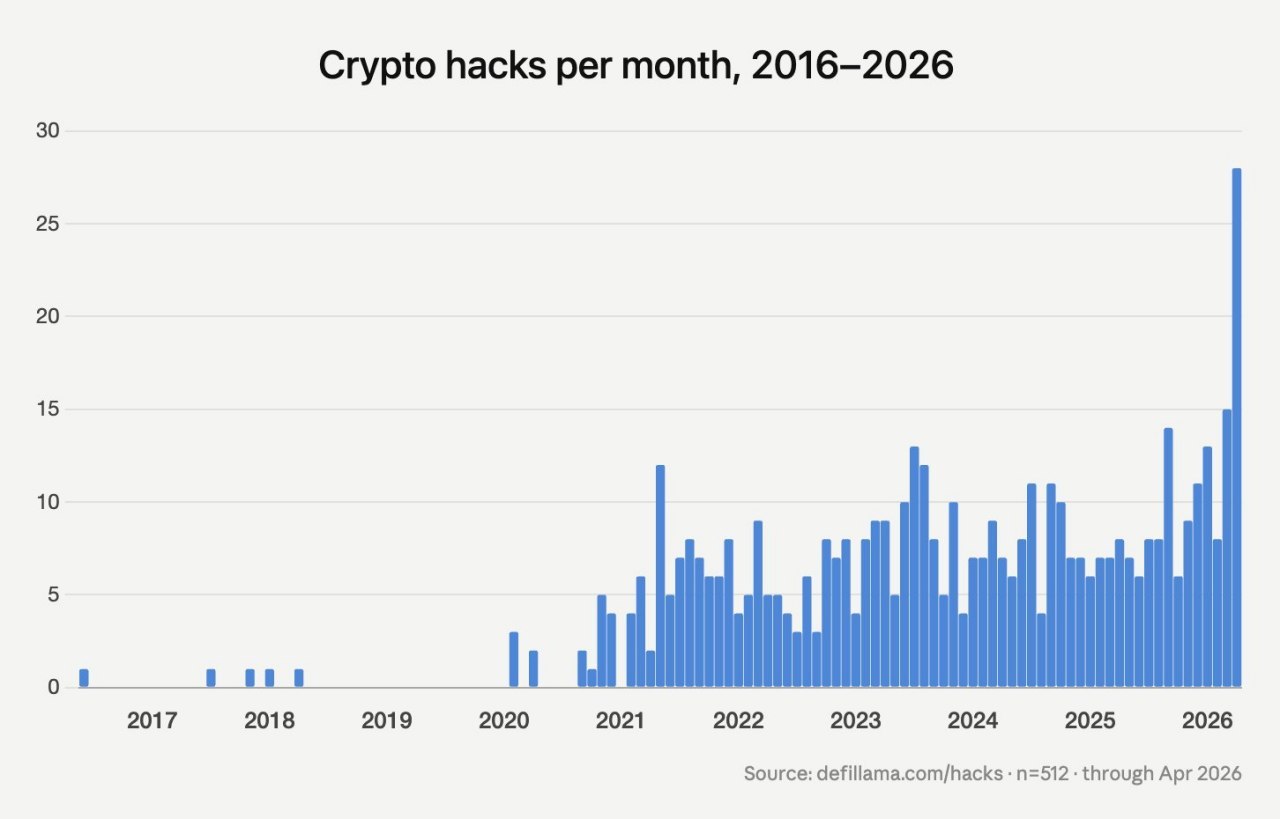
If you feel like crypto hacks are happening more often than usual, you're not imagining it. A chart from DefiLlama shows a clear spike.
A few weeks ago, industry media reported on a new version of the Claude neural network - Claude Mythos - which is said to be exceptionally good at finding vulnerabilities in code. Mythos hasn’t been released publicly yet. But once this kind of technology reaches maturity, there’s no putting the genie back in the bottle. This surge in hacks likely isn’t a coincidence.
Even so, today’s news about the Bisq exploit really stood out to me. Bisq is a decentralized platform for buying and selling Bitcoin for fiat. It’s been around for 10 years, and hasn’t had a single exploit in the past 6. It doesn’t look like an easy target: every Bitcoin transaction requires two signatures - from the buyer and the seller. There are no complex smart contracts where subtle bugs can hide. To steal funds, you’d have to trick a human into signing off on a malicious transaction. More specifically, you’d have to deceive the seller into signing a transaction that releases Bitcoin to the buyer without the buyer actually sending the fiat payment.
The system looked about as safe as it gets. And yet, it was still exploited.
What the attackers appear to have found is this: the application that shows the seller what they are signing doesn’t validate the transaction based on its raw technical data. Instead, it relies on metadata provided by the buyer at the moment they add their signature. That’s the piece the attacker manipulated. Sellers believed they were sending Bitcoin back to themselves from a multisig address, while in reality they were signing a transaction that transferred the funds to the attacker. In other words, the attacker was simply the counterparty in the trade.
This is why, today more than ever, simplicity of process and trust in your counterparty matter in crypto operations.
At rabbit.io, that’s exactly what we focus on:
- you are shown the address where you need to send one cryptocurrency;
- we know the address where you want to get the other one;
- that’s it.
Your only task is to carefully copy the address and send the correct amount. We keep it as simple as possible and as reliable as it gets.