


The Industry Bails Out Aave - But Not the Ethereum Foundation
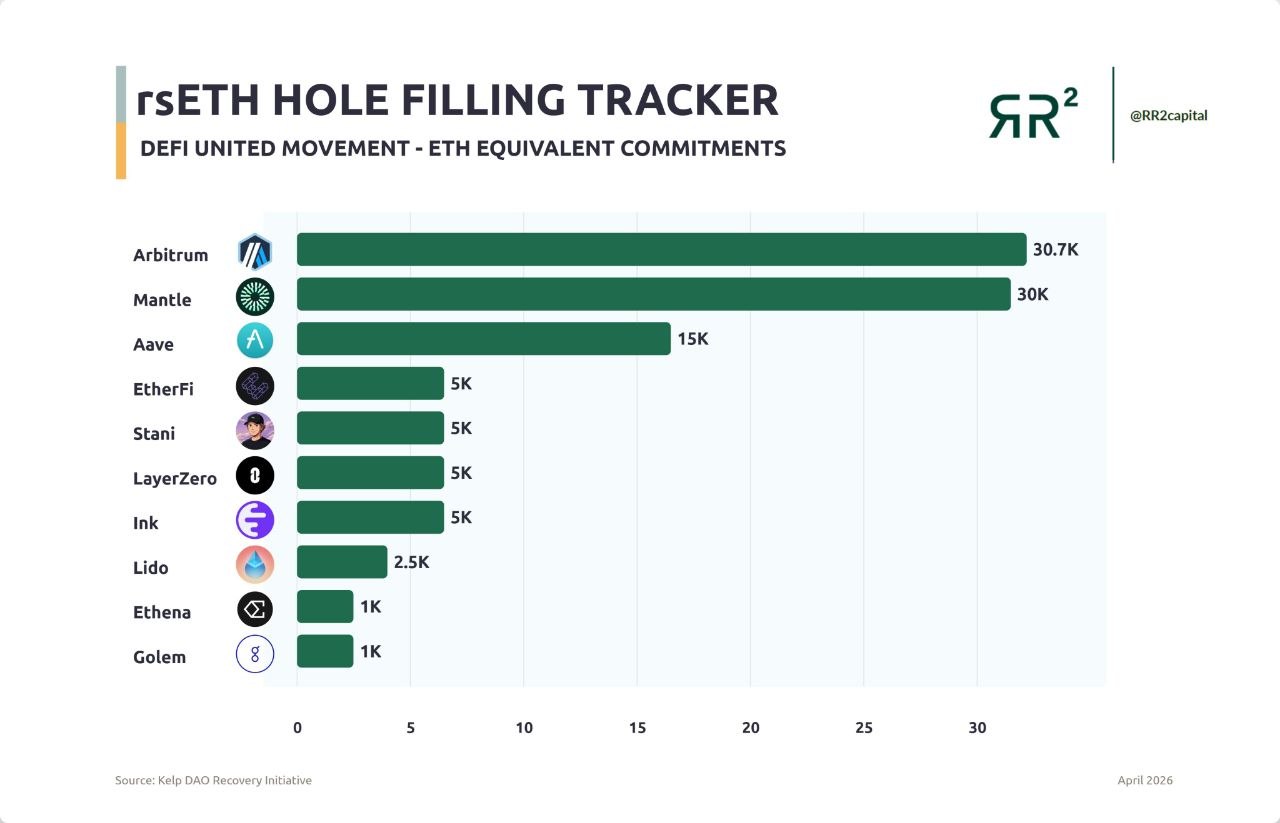
The crypto industry is pooling funds to support Aave after the fallout from the KelpDAO exploit. The fundraising effort is being tracked by RR2 Capital (see the screenshot above).
For those who haven’t followed the story: the attackers behind the KelpDAO hack obtained unbacked rsETH - tokens that effectively had no value - and used them as collateral on Aave to borrow real ETH. The losses were ultimately borne by Aave users who had supplied ETH to lending pools (they lent it out, but the chances of recovery are effectively zero), as well as AAVE stakers, who are responsible for covering such shortfalls. Regular AAVE holders also took a hit as the token price declined.
Now the industry is stepping in to support Aave, much like it did a year ago when Bybit lost an even larger amount of ETH in a hack. Back then, the exchange was bailed out by peers and competitors who provided ETH to plug the hole. Today, Aave is receiving similar backing. Teams and companies behind Arbitrum, Mantle, EtherFi, LayerZero, Ink, Lido, Ethena, and Golem have contributed thousands of ETH to cover the damage.
Against this backdrop, one absence stands out: the Ethereum Foundation. It hasn’t contributed anything - and at the same time, it has sold 10,000 ETH from its reserves.
This brings to mind a rabbit.io user who once told our support team, while asking about swapping into ETH, that they saw Ether as a highly promising asset - largely because ETH sees the strongest demand on Aave.
It seems the Ethereum Foundation doesn’t share that view. It neither needs ETH itself, nor appears interested in supporting the very platform that helps build trust in its future.