


Ripple Wants AI Payments - But Does It Need XRP?
There's been plenty of coverage today about Ripple's push to integrate the XRP Ledger into the emerging world of AI agent payments.
The logic isn't hard to follow: as we offload more money-related tasks to AI, specialized payment infrastructure becomes essential. Crypto has a real shot at filling that role. Since crypto is rarely treated as money in the legal sense, there may be fewer regulatory hurdles to letting an AI operate autonomously without requiring human sign-off at every step. That could actually work in crypto's favor.
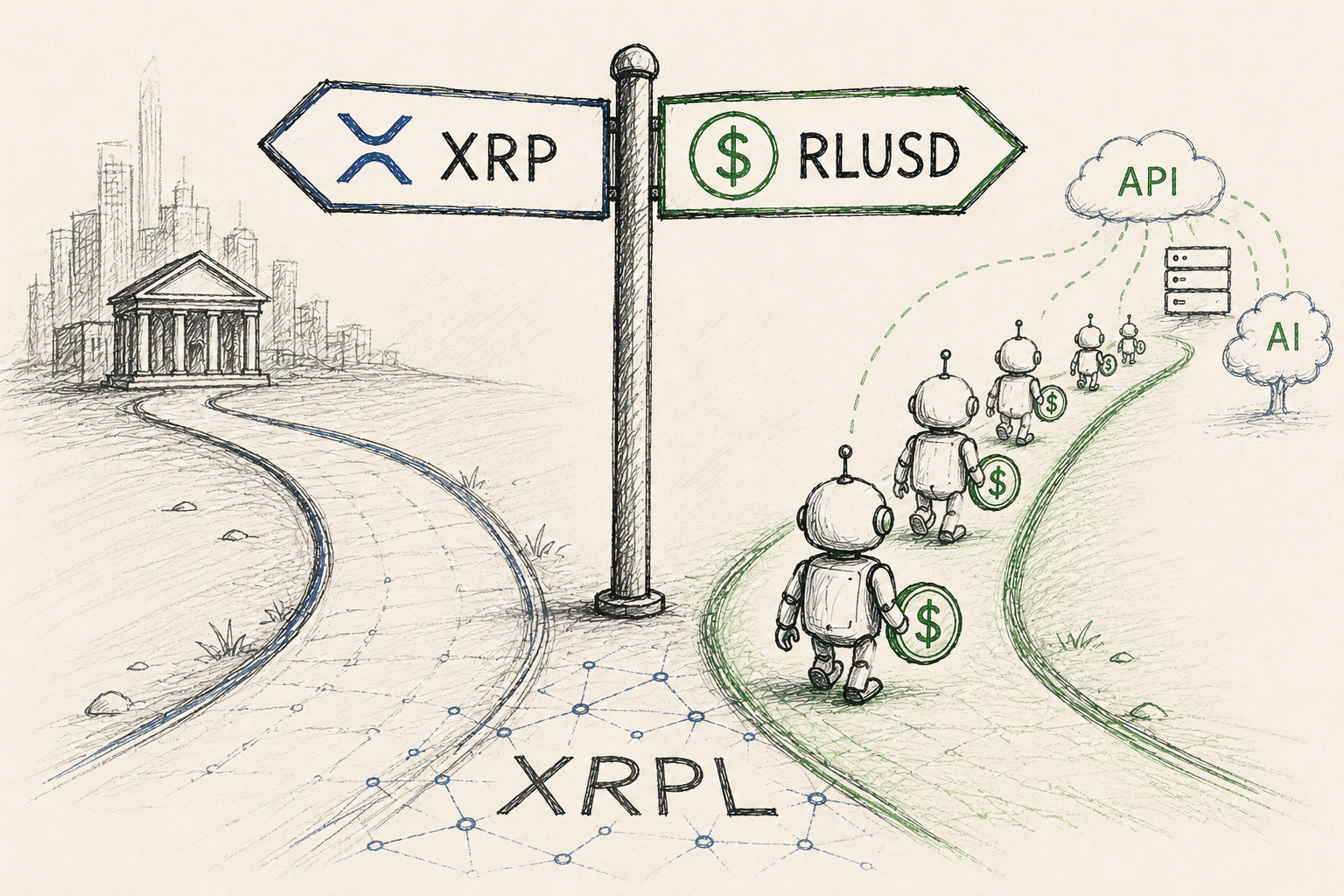
Here's where things get interesting, though. Take a close look at what Ripple is actually offering in its XRPL AI Starter Kit: payments not just in XRP - the ledger's native token - but also in RLUSD, Ripple's own stablecoin. So which will developers choose? Honestly, the stablecoin seems like a no-brainer.
XRP was originally built around a compelling narrative: fast, low-cost global payments, with banks and financial institutions eventually having to buy XRP to use the network. That structural demand was the whole thesis.
But now Ripple is actively promoting a direct competitor to its native token in the very use case where XRP could have finally made perfect sense. Which raises a question: is there any meaningful reason for XRPL users to hold XRP anymore? Maybe just a negligible sum to cover transaction fees. That's about the extent of it.
Is it time to move on from XRP and into something with a more compelling future? If you think so, make that swap on rabbit.io.