

How ZEC Got Trapped Behind a Seed Phrase
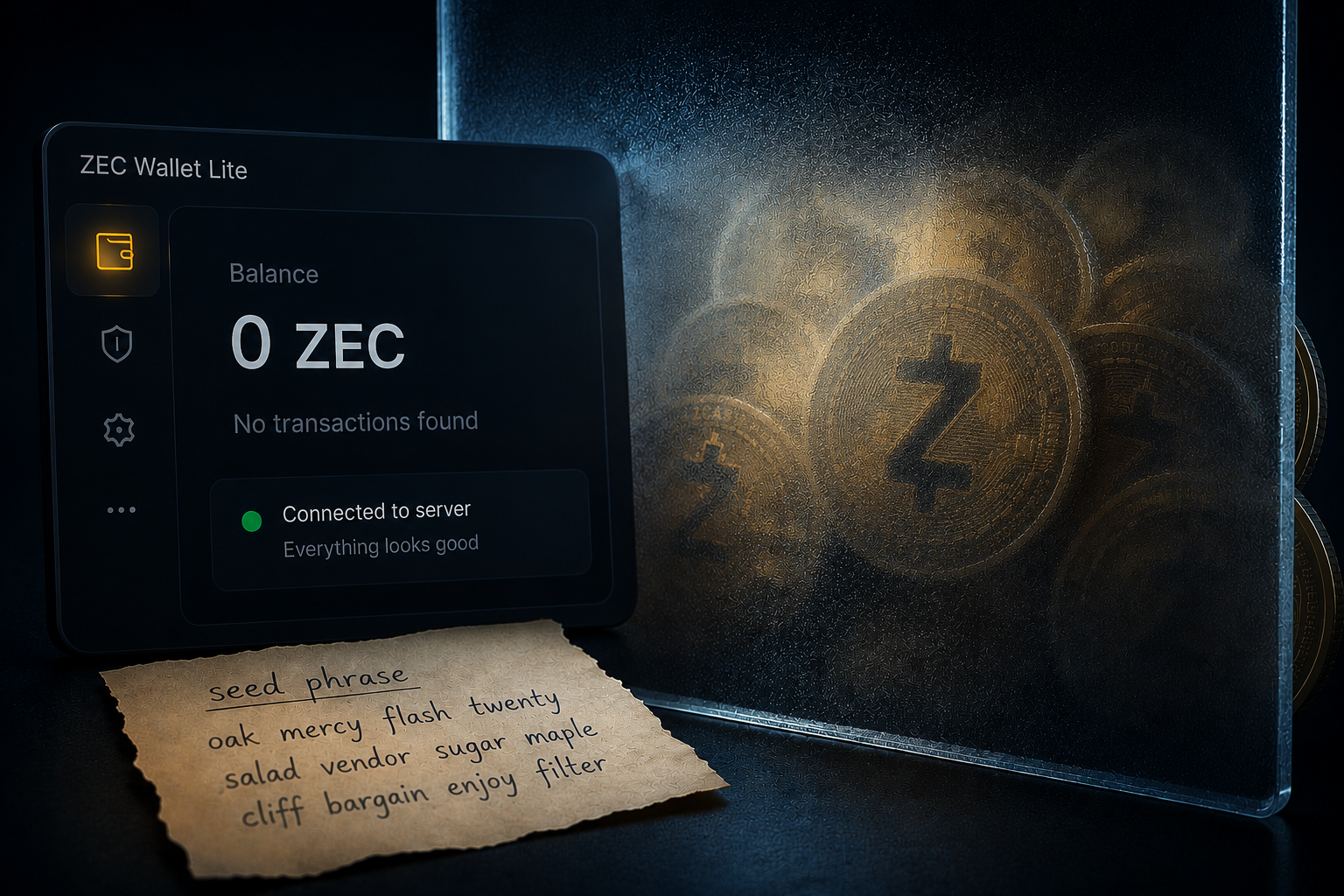
A few days ago, the nonprofit Sovright released a tool for recovering funds that became inaccessible after support for the old ZEC Wallet Lite wallet ended. The wallet has not been maintained by its developers since 2022.
Sovright's Executive Chair, Michelle Lai, explained that the new solution, called Argos, will let users who still have their old wallet seed phrases recover their funds.
This is where the average crypto user should be asking an obvious question: how is it possible to have the seed phrase but still not have access to the crypto?
This situation highlights an important issue of seed-phrase backups that a lot of people forget about. A single seed phrase can generate private keys for an enormous number of addresses. In the context of Zcash shielded addresses, the ZIP 32 standard allows access to an address space of 2⁸⁸ possible addresses - a 27-digit number. And when addresses are private, that creates a real problem.
In a wallet for public blockchains, a seed phrase generates many addresses following a fixed set of rules. During recovery, the wallet scans through addresses using those same rules, in the same order. The recovery algorithm checks whether each address has any transaction history, and stops once it hits a sufficiently long empty stretch. For transparent addresses, this is easy, since the blockchain publicly shows which addresses have been used.
With private, or shielded, addresses, though, there is no way to look at the blockchain and see whether a given address has any transactions. Fully recovering a wallet would theoretically mean sifting through an unmanageable amount of data. That is exactly why a seed phrase does not guarantee you will regain access to your coins in a new wallet that has no knowledge of your history with the old one.
Strictly speaking, this kind of problem might happen on transparent blockchains too. Here is a hypothetical example: if you hit "generate new address" in your wallet 50,000 times, and then receive coins only on the very last address generated, no seed-phrase recovery tool would ever notice you have those coins. The reason is simple: to reach that one funded address, the tool would have to scan through far too many empty ones first, and every recovery tool has a stopping threshold well below 50,000 iterations.
So it is genuinely great that there are enthusiasts out there building technology to help people recover access to their crypto even in tricky cases like this. Thanks to them, someone who kept their seed phrase for four years after a wallet stopped being supported still gets a shot at getting their coins back.
What was ZEC even worth back in 2022? Right now on rabbit.io, you can swap 1 ZEC for 462 USDT. I am pretty sure ZEC holders were not seeing numbers like that back then.