


A $2M Reminder Not to Keep Crypto on Exchanges
According to Cointelegraph, a Seychelles court has ordered KuCoin to pay a Swiss customer more than $2 million over a token delisting dispute. There are three things about this story worth digging into.
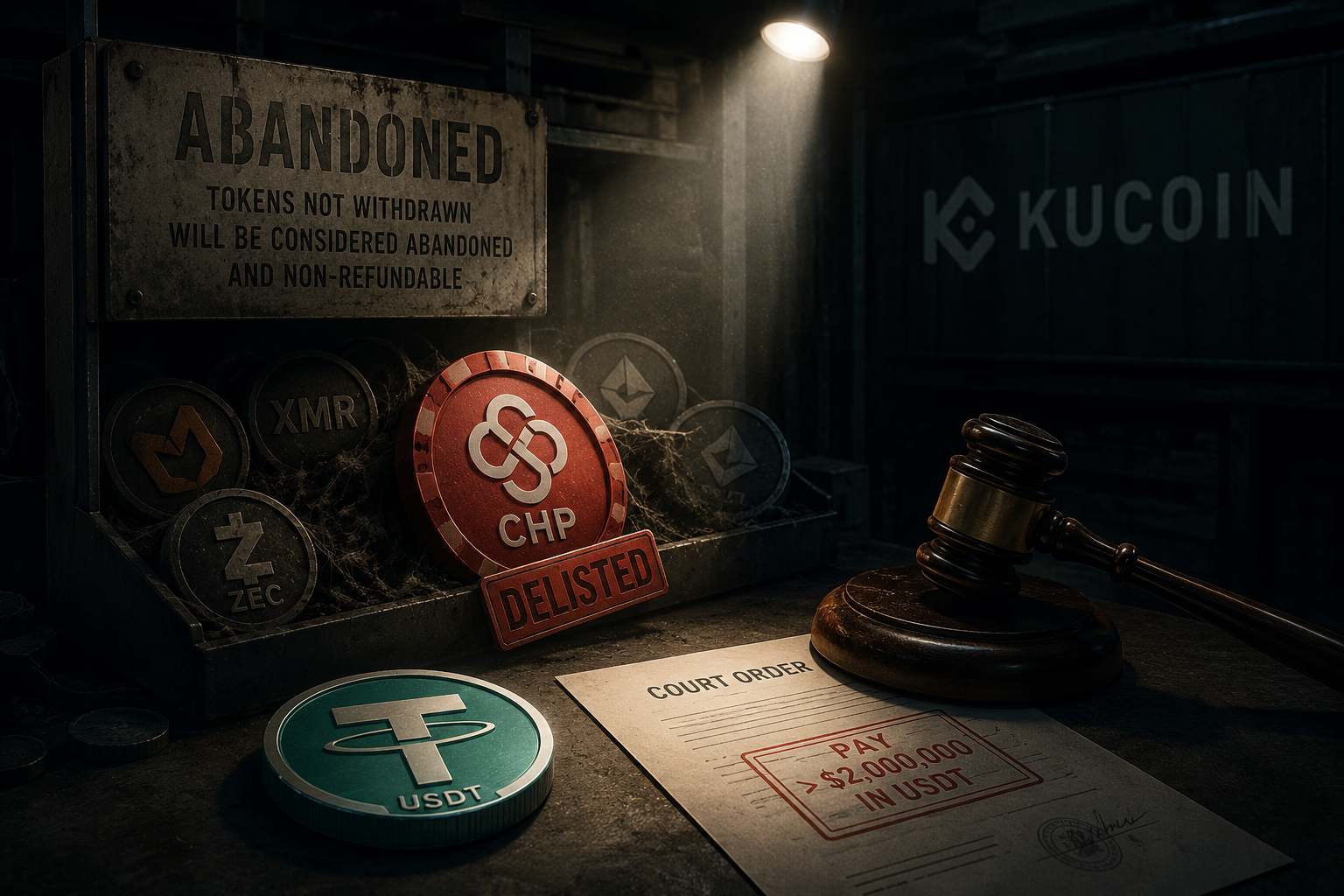
For anyone unfamiliar with the case: back in 2021, KuCoin delisted CoinPoker's CHP token. Ahead of the delisting, it emailed users who still held a CHP balance, warning that any coins not withdrawn in time would be treated as abandoned and non-refundable. One of those users challenged the legality of that notice in the jurisdiction where the exchange is registered: Seychelles. No one from KuCoin showed up to court, and the judge ruled in the user's favor.
Here's what stood out to me.
- In a dispute between a company registered in Seychelles and a resident of Switzerland, the court ordered the damages to be paid not in Seychellois rupees, and not in Swiss francs, but in USDT. It is one more sign that USDT is increasingly treated as a means of payment in its own right.
- The ruling came down back in December 2025, and the exchange still has not paid up. It looks like offshore registration can amount to essentially zero legal protection for users. Even if you can afford to take an exchange to court in its home jurisdiction, getting that ruling actually enforced is a whole different - and much harder - fight.
- It creates real operational and compliance headaches for exchanges to keep custody of and account for tokens they have already delisted, especially when the delisting happened for regulatory reasons, like with privacy coins back in 2024. Continuing to hold those tokens can become a liability for the exchange itself. So rulings like this one may push exchanges toward new ways of getting unwanted tokens off their books, such as inactivity fees.
Points two and three are just more reasons to stop keeping your crypto on exchanges. Hold your own keys. And whenever you need to swap something, that is what rabbit.io is for.