


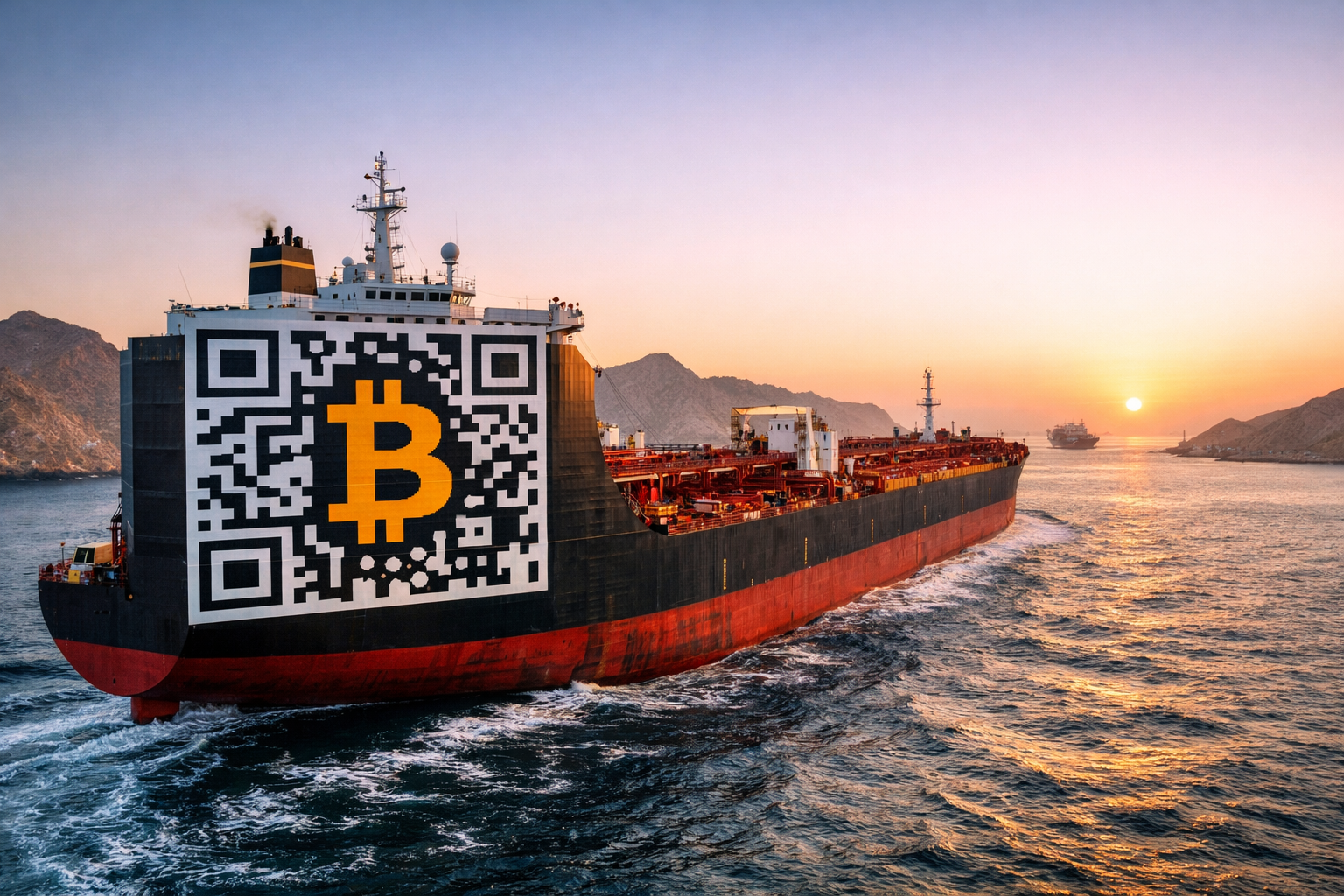
Iran’s Bitcoin Demand - A Glimpse of the Future
Media report that Iran is going to charge vessels $1 per barrel of oil to pass through the Strait of Hormuz during the ceasefire. Given that 15-20 million barrels used to pass through the strait daily, the total adds up to a substantial amount.
But the most interesting part is a statement by Hamid Hosseini, spokesperson for Iran’s Oil, Gas and Petrochemical Exporters’ Union, who said that payments should be made in Bitcoin. Can you imagine how this would reshape demand for Bitcoin if oil carriers actually agreed? Bitcoin would no longer be seen as just a store of value - it would become the only viable means of payment in this sector. Today, Ether is often called "digital oil", but in this scenario, that role could easily belong to Bitcoin.
I doubt this demand from Iran will be taken seriously. Still, this is not just another step toward Bitcoin adoption - it would be a massive leap.
There’s a moment in Ayn Rand’s Atlas Shrugged where a government official declares that the state is willing to pay any price for what it needs. The person capable of supplying it responds that no amount of that state’s currency is of interest. Money controlled by the state holds no value for a free seller. He is willing to accept payment only in the money that is not controlled by the state - and in the novel, that money is gold.
And now we are seeing this discourse move from the pages of a novel to the pages of major newspapers. The price is quoted in dollars, but it is made clear that dollars themselves are not what Iran wants. And it’s not simply because they are the currency of an adversary. Chinese yuan, Russian rubles, and even Iranian rials are no more appealing. All of them are equally unreliable forms of money.
I’ll admit, I was somewhat surprised that Bitcoin was the chosen option. At rabbit.io, we work with many cryptocurrencies whose developers claim they outperform Bitcoin. And in practice, we see that Bitcoin is not the most convenient means of payment. Its transactions take not seconds, as in many other blockchains, but often tens of minutes.
So if you were in Iran’s position - which cryptocurrency would you choose?