


Can Freshly Mined Bitcoin Be "Dirty"?
Four days ago, Public Pool reported on X that a solo miner had found a Bitcoin block using a Bitaxe device that costs around $150.
Today I decided to check what the miner had done with the 3.1382 BTC reward, worth roughly $200,000. Had they spent it to cover their electricity costs, or were they simply holding onto it?
I opened Blockchair, the blockchain explorer we often link to on completed swap pages at rabbit.io, so customers can easily find the relevant transaction on any supported blockchain. But when I opened the page for this address, I saw something I really wasn't expecting.
The bitcoin the miner received as a block reward is still sitting untouched at bc1q0p...dyzts7. Receiving that reward is the only transaction involving this address in Bitcoin's entire history. In other words, the address has never interacted with any other address on the blockchain.
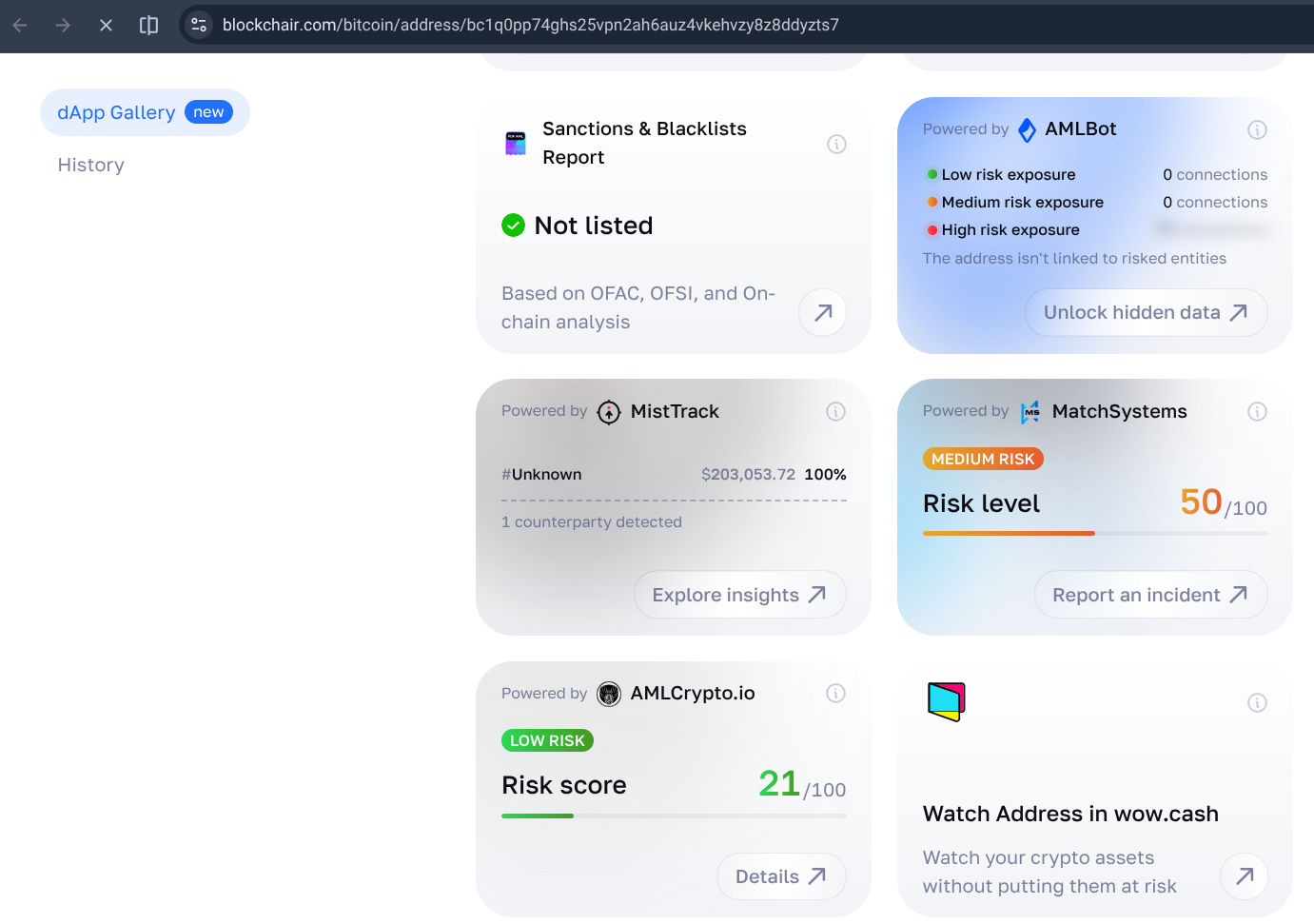
But Blockchair doesn't just show an address's transaction history. It also displays money-laundering risk assessments associated with that address. And as it turns out, one AML provider gives this address a risk score of 50 out of 100.
Makes you wonder: what could possibly be "cleaner" than freshly mined bitcoin?