


Buy TER, Move to Bhutan: A New Model for Token Distribution
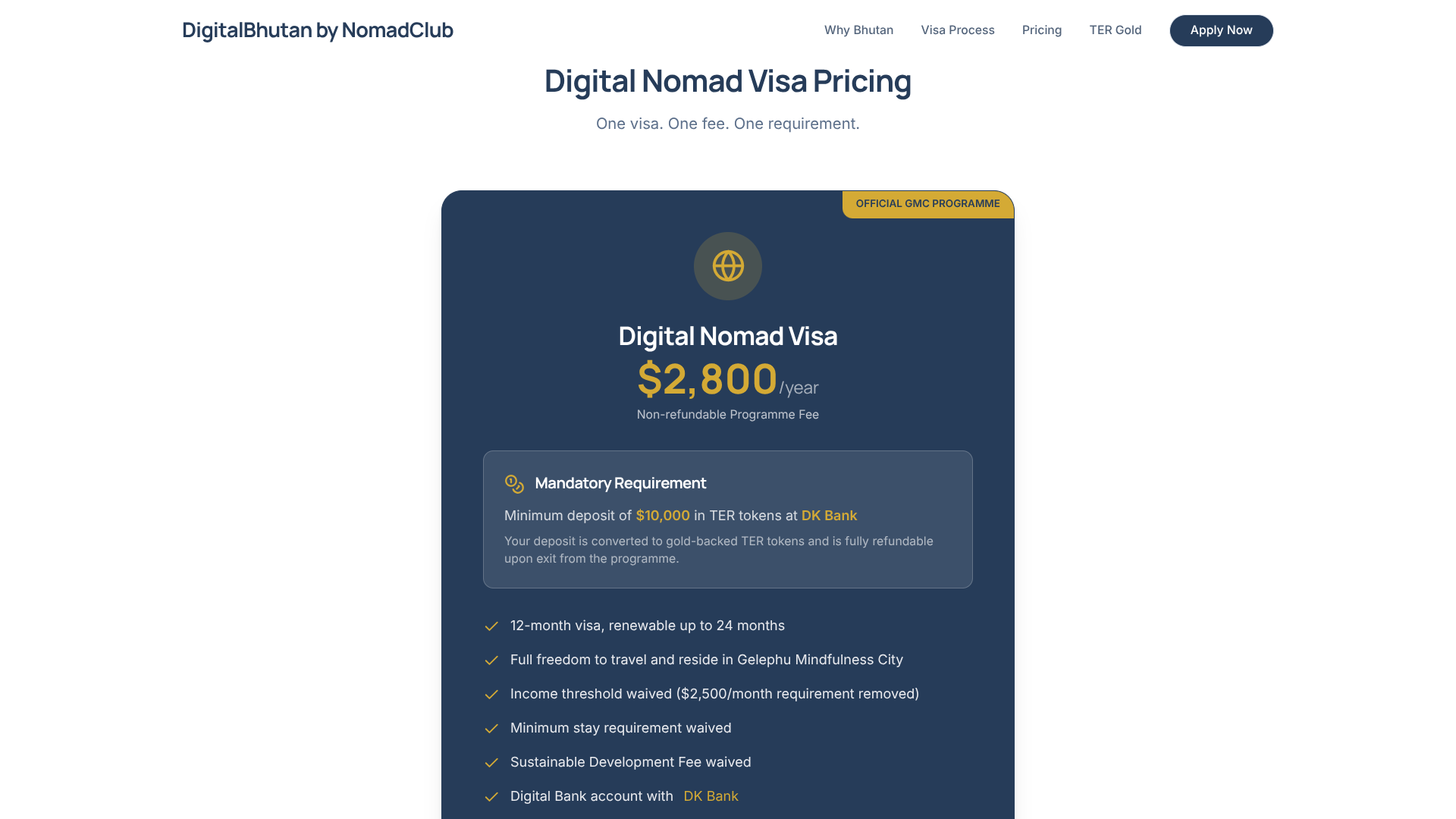
You may have heard about Bhutan’s unprecedented digital nomad visa: pay $2,800 and you can live there for a full year.
For anyone who has ever wanted to spend time in Bhutan, the offer sounds incredibly tempting. The country has long been extremely closed off. Officially, the only way to visit is as part of an organized tour - with a licensed guide who accompanies you everywhere and makes sure you do not wander where you are not supposed to.
I know two people who managed to get into Bhutan without a guide.
One did it completely illegally. He found an unguarded stretch of the border with India where residents of nearby villages cross back and forth for trade. Although he did not live in one of those villages, he traveled there, slipped across into Bhutan, took a few geotagged photos on his smartphone, and quickly returned before anyone caught him.
The other was far more brazen. At the border, he said he was about to go hire a guide, as required. Instead, he walked past the tourist office and set off to explore the country on his own - creating trouble for every local who gave him a ride or offered him a place to stay.
Ordinary tourists in Bhutan are subject to very strict limitations.
And now, suddenly, there is an opportunity to live and travel across the kingdom for 12 months, with the option to extend for another year. A revolutionary shift in how foreigners are treated.
But what really caught my attention was this: one of the mandatory requirements is to purchase $10,000 worth of TER tokens and place them in a bank. At the end of your stay, you can sell the tokens back if you wish.
I have never seen this kind of token distribution mechanism before. Creative minds at work in Bhutan. It will be interesting to see whether this approach catches on.